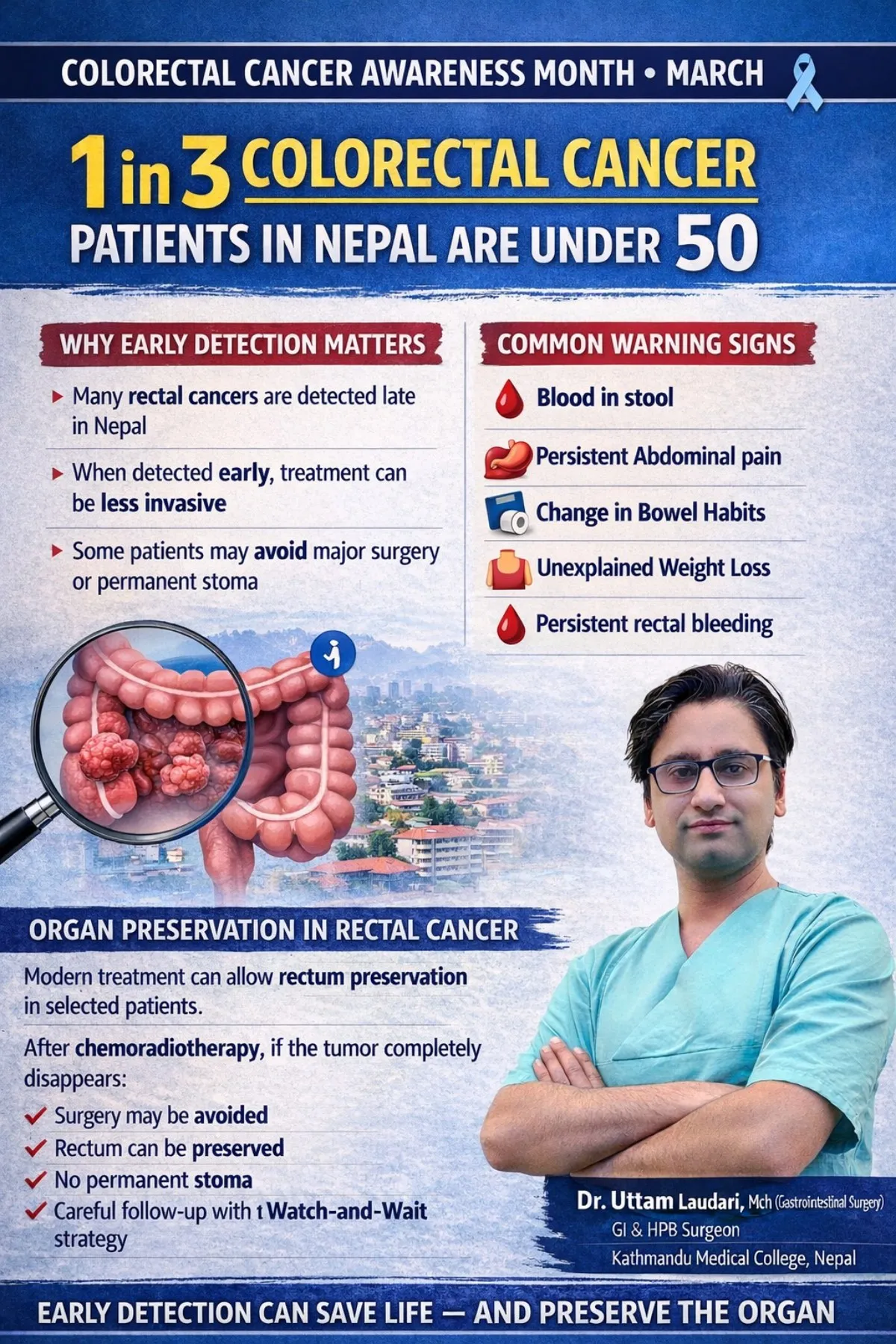
Expert Answers by
Dr. Uttam Laudari, MCh (GI Surgery)
GI & HPB Surgeon | Kathmandu Medical College
Colorectal cancer is one of the most common cancers worldwide, and its incidence is increasing even among younger individuals. Early detection, proper screening, and multidisciplinary treatment can significantly improve outcomes.
Below are answers to common questions patients ask about colorectal cancer.
What are the symptoms of colorectal cancer?
Colorectal cancer may initially develop without obvious symptoms. However, patients should seek medical evaluation if they experience:
• Blood in stool
• Persistent rectal bleeding
• Change in bowel habits (diarrhea or constipation)
• Narrow stools
• Persistent abdominal pain or bloating
• Unexplained weight loss
• Fatigue due to anemia
These symptoms do not always indicate cancer, but persistent symptoms should always be investigated.
Is colorectal cancer increasing in younger people?
Yes. In recent years, colorectal cancer is increasingly being diagnosed in patients under the age of 50.
Many younger patients delay medical consultation because they assume cancer occurs only in older people. This delay may lead to late diagnosis.
For this reason, any persistent rectal bleeding or change in bowel habits should be evaluated regardless of age.
Why is colorectal cancer screening important?
Screening allows doctors to detect precancerous polyps or early cancers before symptoms develop.
Benefits of screening include:
• Prevention of cancer by removing polyps
• Early diagnosis when treatment is most effective
• Reduced colorectal cancer mortality
Screening is therefore considered one of the most effective cancer prevention strategies.
What is colonoscopy?
Colonoscopy is the gold standard test for colorectal cancer detection and prevention.
During colonoscopy:
• A flexible camera is inserted into the colon
• The entire colon and rectum are examined
• Polyps can be removed immediately
• Suspicious areas can be biopsied
Colonoscopy is both a diagnostic and preventive procedure.
When should people undergo colorectal cancer screening?
Most international guidelines recommend starting screening at 45 years of age for individuals with average risk.
However, screening may start earlier if there is:
• Family history of colorectal cancer
• Inflammatory bowel disease
• Known hereditary cancer syndromes
Your doctor can determine the most appropriate screening strategy for you.
Is genetic testing important in colorectal cancer?
Yes, some colorectal cancers are related to hereditary syndromes, including:
• Lynch syndrome
• Familial adenomatous polyposis (FAP)
Genetic evaluation may be recommended in patients with:
• Early-onset colorectal cancer
• Strong family history of cancer
• Multiple cancers within the same family
Identifying these syndromes helps guide screening for family members and personalized treatment planning.
Can rectal cancer be treated while preserving the rectum?
In selected patients, organ preservation strategies may be possible.
After chemoradiotherapy, some rectal cancers may completely disappear (complete clinical response). In such cases, a Watch-and-Wait approach may be considered.
Potential benefits include:
• Preservation of the rectum
• Avoidance of major surgery
• Avoidance of permanent stoma
• Improved quality of life
Patients undergoing this strategy require careful and regular follow-up.
Can Stage IV colorectal cancer still be treated successfully?
Yes. Even in Stage IV colorectal cancer, modern treatment strategies have significantly improved outcomes.
Treatment options may include:
• Advanced chemotherapy
• Targeted therapy
• Surgical removal of liver metastases
• Lung metastasis surgery
• Multimodal cancer treatment
In selected patients, long-term survival and meaningful outcomes are achievable.
Why is multidisciplinary team (MDT) care important?
Colorectal cancer treatment often requires coordination between multiple specialists.
A Multidisciplinary Team (MDT) may include:
• Gastrointestinal surgeons
• Medical oncologists
• Radiation oncologists
• Radiologists
• Pathologists
Through MDT discussions, each patient receives a personalized treatment plan based on the best available evidence.
About Dr. Uttam Laudari
Dr. Uttam Laudari is a Gastrointestinal and Hepatopancreatobiliary (HPB) Surgeon specializing in complex abdominal and cancer surgery.
His clinical interests include:
• Colorectal cancer surgery
• Organ-preserving strategies for rectal cancer
• Advanced pancreatic surgery
• Major liver resections
• Biliary tract cancer surgery
• Multidisciplinary cancer care
Dr. Laudari has extensive experience in advanced gastrointestinal surgery and complex hepatopancreatobiliary procedures, with international training exposure.