Is Stage IV colorectal cancer always incurable?
Many people believe that Stage IV colorectal cancer has no curative treatment. This is a myth.
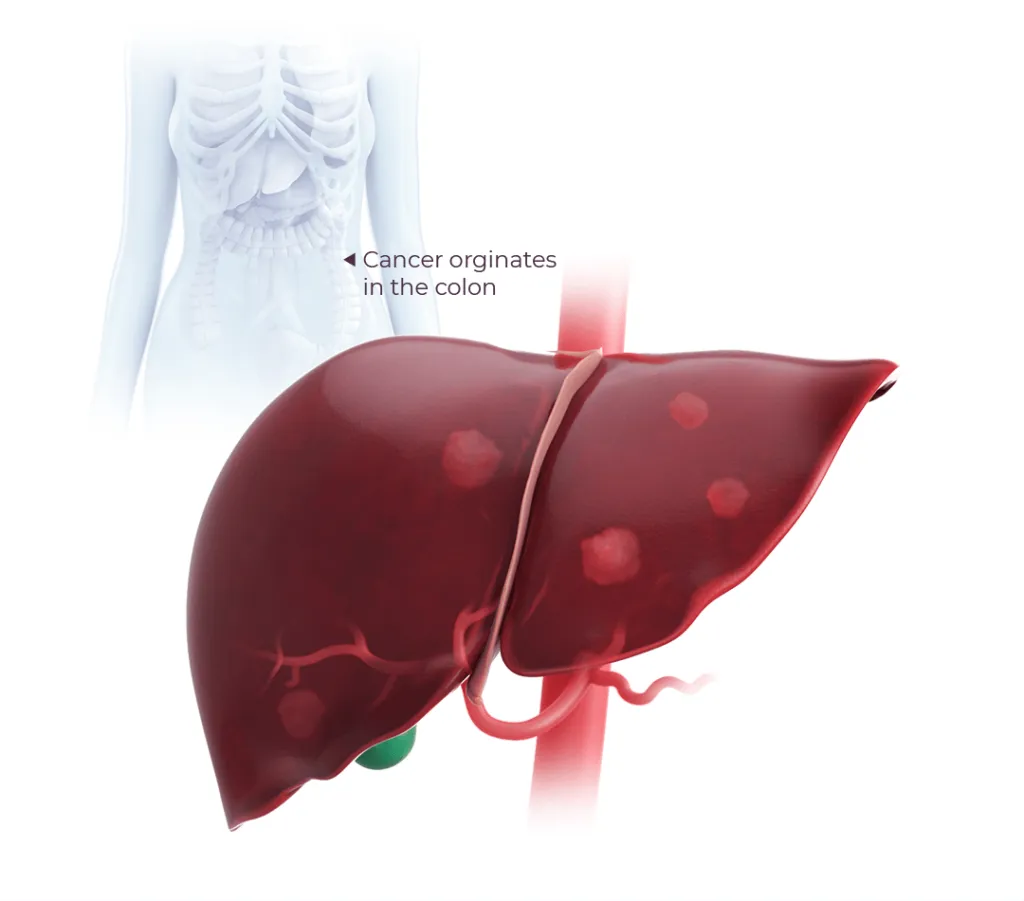
Stage IV means the cancer has spread to other organs, most commonly the liver or lungs. However, modern cancer treatment has advanced significantly. In selected patients, long-term survival and even cure may be possible.
Treatment decisions depend on the extent of disease, tumor biology, and response to therapy.
What does Stage IV colorectal cancer mean?
Stage IV colorectal cancer means the cancer has spread from the colon or rectum to other organs such as:
• Liver (most common)
• Lungs
• Peritoneum
• Other distant organs
Even when metastases are present, treatment may still aim for long-term disease control or cure in selected cases.
Why is molecular testing important in Stage IV colorectal cancer?
Modern cancer treatment is personalized.
Doctors often perform molecular analysis of the tumor, which may include tests for specific genetic changes. These tests help determine:
• Tumor behavior and biology
• Which targeted therapies may work
• The best chemotherapy strategy
Understanding the tumor’s molecular profile helps guide precision cancer treatment.
What is the first step in treatment?
In many patients with Stage IV disease, treatment often begins with systemic therapy, which may include:
• Chemotherapy
• Targeted therapy
• Combination treatment
This is sometimes called neoadjuvant or conversion therapy, meaning treatment given to shrink tumors before surgery.
The goal is to control disease and potentially make surgery possible.
What happens after chemotherapy?
After several cycles of treatment, doctors perform repeat imaging (restaging) to evaluate how the cancer has responded.
Possible outcomes include:
• Tumors shrink significantly
• Disease becomes stable
• Previously unresectable tumors may become resectable
This process is called downstaging, and it may allow curative surgery in selected patients.
Can surgery still be done in Stage IV colorectal cancer?
Yes. If tumors respond well and become surgically removable, doctors may consider curative surgery.
Treatment may include:
• Removal of the primary colon or rectal tumor
• Removal of liver metastases
• Removal of lung metastases
In carefully selected patients, combined surgical treatment may offer long-term survival.
What are the treatment options for liver metastases?
The liver is the most common site where colorectal cancer spreads.
Modern liver-directed treatments include:
• Parenchymal-sparing liver surgery, which removes tumors while preserving healthy liver tissue
• Radiofrequency ablation (RFA) to destroy tumors using heat
• Microwave ablation, another minimally invasive technique to treat small tumors
• Portal vein embolization, which helps grow the remaining healthy liver before major surgery
• Two-stage hepatectomy, a strategy used when multiple tumors are present
These techniques allow surgeons to treat complex liver metastases safely.
Can lung metastases also be treated?
Yes. When colorectal cancer spreads to the lungs, treatment options may include:
• Surgical removal of lung metastases
• Local ablative treatments in selected cases
In properly selected patients, lung metastasis surgery can contribute to long-term disease control.
Why is multidisciplinary team (MDT) care important?
Stage IV colorectal cancer requires coordinated care from multiple specialists.
A multidisciplinary team may include:
• Gastrointestinal surgeons
• Liver surgeons
• Medical oncologists
• Radiation oncologists
• Radiologists
• Pathologists
Through MDT discussion, each patient receives a personalized treatment strategy based on the best available evidence.
What is the key message for patients?
The most important message is:
Stage IV colorectal cancer is not always hopeless.
With modern chemotherapy, targeted therapy, advanced liver surgery, and multidisciplinary care, many patients can achieve meaningful long-term outcomes.
Early consultation with an experienced cancer team can help determine the best possible treatment plan.
About Dr. Uttam Laudari
Dr. Uttam Laudari is a Gastrointestinal and Hepatopancreatobiliary (HPB) Surgeon with expertise in advanced abdominal and cancer surgery.
His clinical interests include:
• Colorectal cancer surgery
• Liver metastasis surgery
• Advanced hepatopancreatobiliary procedures
• Multidisciplinary cancer care
• Complex gastrointestinal oncology
He works closely with oncology specialists to provide evidence-based and personalized cancer treatment strategies.